
In our last article we explored modern scientific questions like time travel, the edge of the cosmos, and life beyond Earth — the next logical and fascinating step is to dive into the most powerful and mysterious objects in the universe: black holes, stars, and cosmic creation.
The Cosmic Dance: Black Holes, Stars, and the Birth of New Worlds
In our previous article, we journeyed to the edge of the universe, peeked into the mysteries of time travel, and imagined humanity’s next big adventure — living among the stars. But the story of the universe goes far deeper than exploration. It is also a story of life and death on a cosmic scale — of brilliant stars that shine for millions of years, of terrifying black holes that swallow light itself, and of new worlds being born from stardust.
Let’s take a journey into this grand cosmic cycle — the dance that never ends.
The Life of a Star: From Dust to Light
Every star — from the gentle twinkle you see at night to our own mighty Sun — begins its life in a cloud of gas and dust floating in space. These clouds are called nebulae, and they are the nurseries of stars. When parts of a nebula collapse under gravity, the gas begins to heat up. Eventually, it becomes so hot that atoms start fusing together, releasing enormous energy. A star is born — a glowing ball of hydrogen and helium that burns for millions or even billions of years.
Our Sun, for example, has been shining for about 4.6 billion years and still has plenty of fuel left.
Stars come in different sizes and colors — small red ones burn slowly and live long, while massive blue ones live fast and die young.
Did you know?
A single teaspoon of a dense star called a neutron star would weigh billions of tons on Earth!
When Stars Die: Supernovas and Cosmic Recycling
Nothing lasts forever — not even stars.
When a massive star runs out of fuel, it collapses under its own gravity and explodes in a huge blast called a supernova.
A supernova is one of the most powerful events in the universe — so bright that for a few days, it can outshine an entire galaxy.
But here’s the amazing part: these explosions are not just endings — they are also beginnings.
Supernovas scatter elements like carbon, oxygen, iron, and gold into space.
Every atom in your body — from the iron in your blood to the calcium in your bones — was once made inside a star.
In other words: we are literally made of stardust.
Black Holes: The Monsters of the Universe
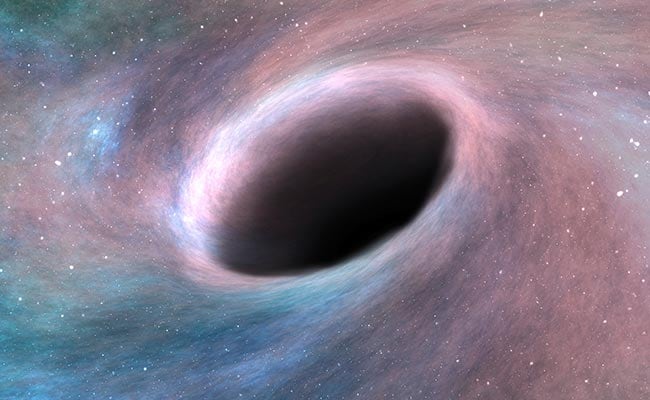
When a very massive star collapses completely, it forms something so dense and powerful that not even light can escape it — a black hole.
A black hole isn’t a hole in the usual sense; it’s a region of space where gravity is so strong that time and space themselves are distorted.
If you got too close, you would be pulled in, stretched thin like spaghetti (scientists actually call this spaghettification!) and never come back out.
At the very center of most galaxies — including our own Milky Way — lies a supermassive black hole millions of times heavier than our Sun.
And yet, black holes may also help shape galaxies, control star formation, and influence the structure of the entire universe.
Did you know?
In 2019, scientists captured the first-ever image of a black hole using the Event Horizon Telescope — proving that these cosmic giants truly exist.
New Worlds from Old Stardust
Out of the ashes of dead stars, new stars and planets are born.
The same elements released in supernovas gather again into clouds, forming new solar systems — a cosmic recycling process that has been going on for billions of years.
Our own solar system formed this way — from the remains of older stars.
That means the gold in your jewelry, the oxygen you breathe, and the water you drink all came from ancient cosmic explosions.
Think about that for a moment:
Every breath you take is a whisper from a star that lived and died long before the Earth even existed.
The Eternal Cycle
The universe is a masterpiece of balance — stars are born, they live, they die, and from their remains, new worlds arise.
Even in destruction, there is creation.
Even in darkness, there is light.
From the blazing birth of stars to the silent pull of black holes, everything in the universe is connected — and somehow, we are part of that connection too.
Coming Up Next…
In our next article, we’ll journey deeper into cosmic mysteries and explore:
How scientists study the beginning of time — the Big Bang itself
What the universe might look like billions of years in the future
And whether the cosmos will end in fire, ice, or something even stranger
Until then, remember — when you look up at the night sky, you’re not just seeing stars.
You’re looking at the story of everything, written in light and time.
With wonder,
Sha