
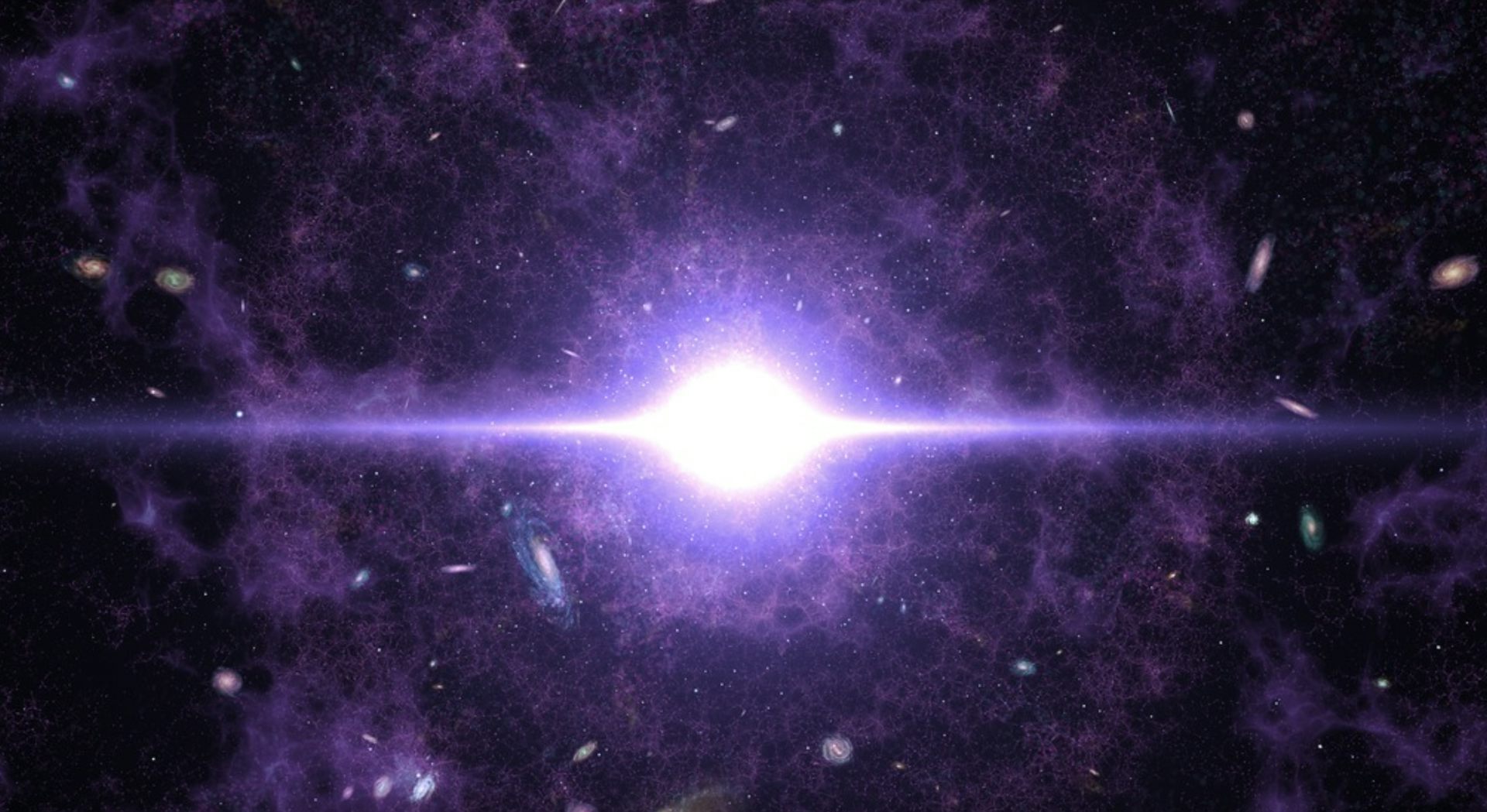
The Beginning of Everything: The Story of the Big Bang
In our last article, we witnessed the grand performance of the universe — the life and death of stars, the power of black holes, and how new worlds are born from cosmic dust.
But every story has a beginning.
Before the first star flickered, before space and time themselves existed, there was — almost nothing.
And then, in an instant, everything began.
Let’s go back to the very first moment — the birth of the universe itself.
What Was the Big Bang?
The Big Bang wasn’t an explosion in space — it was an explosion of space.
About 13.8 billion years ago, everything — energy, matter, time, and space — was packed into a tiny, unimaginably dense point called a singularity.
Then, for reasons still unknown, it began to expand.
In less than a second, the universe grew from smaller than an atom to larger than a galaxy.
That incredible burst of expansion set everything in motion — the birth of space, time, and all the building blocks of matter.
Think of it like this:
Imagine blowing up a balloon. The surface of the balloon represents space — as it expands, everything on it moves apart. That’s what the universe is doing, even today.
The First Few Minutes: Cosmic Chemistry
In the first moments after the Big Bang, the universe was too hot for atoms to exist. It was filled with a soup of tiny particles — protons, neutrons, and electrons — zipping around at incredible speeds.
As the universe cooled, these particles began to combine:
Those first stars lived fast and died spectacularly — creating heavier elements like carbon and oxygen, which later formed planets, oceans, and eventually, us.
The Evidence: How Do We Know This Happened?
You might wonder — how do scientists know the Big Bang really happened?
There are three major clues written across the universe:
Together, these clues tell one clear story: the universe had a beginning.
The Expanding Universe: Growing Older, Growing Colder
The universe didn’t stop expanding after the Big Bang — it’s still expanding today, and even faster than before!
The mysterious dark energy we discussed earlier is believed to be pushing galaxies farther apart.
This means the night sky we see now will look very different billions of years from today.
Eventually, galaxies will move so far apart that only our local group — the Milky Way and its neighbors — will remain visible to future observers.
Imagine:
If someone looked at the universe 100 billion years from now, they might not see any other galaxies at all!
What Will Happen in the Future?
Scientists have a few ideas about how the universe might end:
We don’t yet know which one is true — but each theory reminds us how fragile, and yet how fascinating, our cosmic story is.
From Nothing to Everything
When you think about it, everything around you — every atom, every mountain, every heartbeat — can trace its roots back to that first moment of creation.
The same energy that powered the Big Bang still flows through us.
The universe, in its vastness, is not something separate from us — we are part of its unfolding story.
As the physicist Carl Sagan beautifully said: “We are a way for the cosmos to know itself.”
Coming Up Next…
In our next article, we’ll explore:
Until then, when you gaze at the night sky, remember —
those twinkling lights are ancient messengers, carrying whispers from the moment the universe was born.
Stay curious, keep wondering, and always keep looking up.
With awe,
Sha