
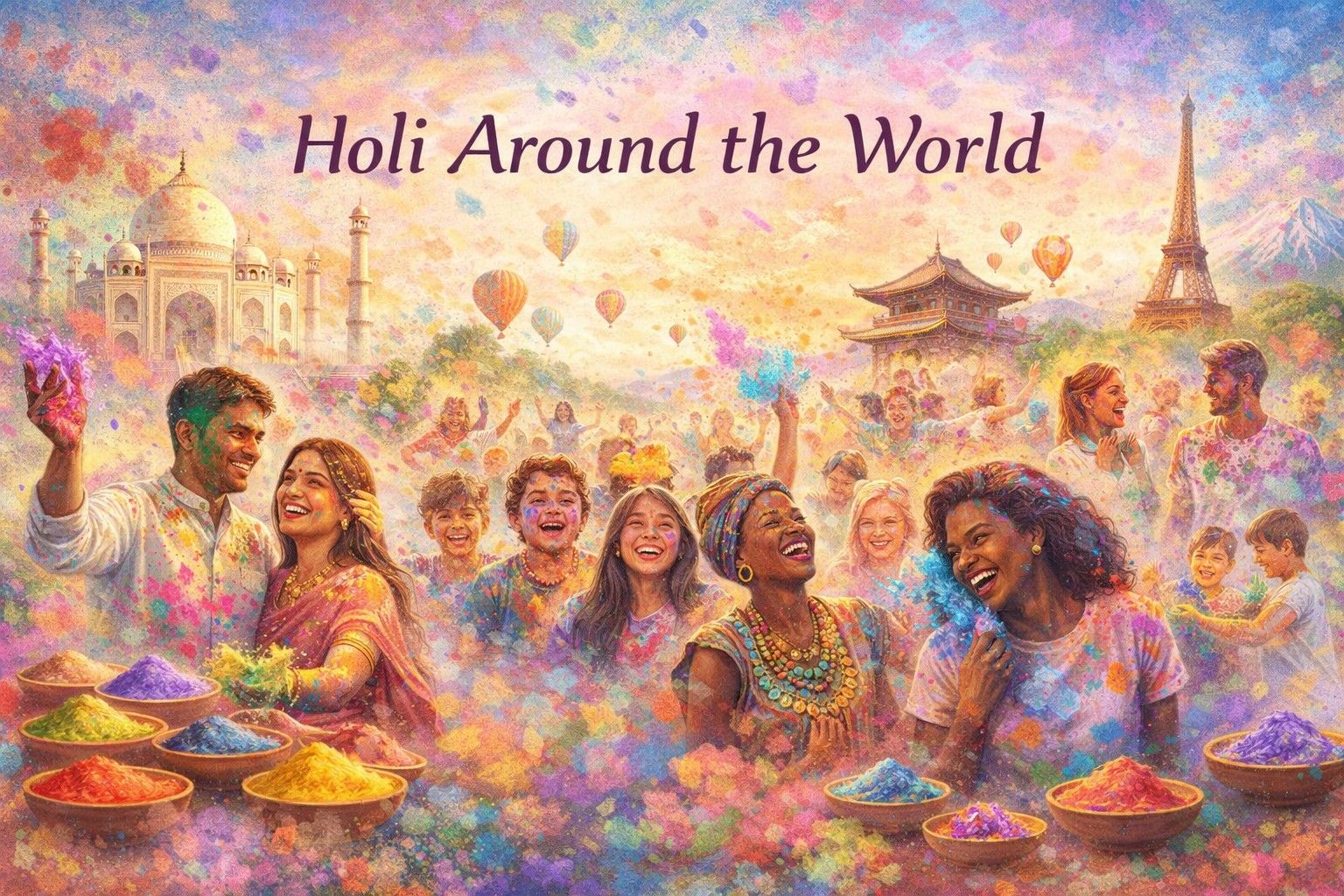
Holi is one of the most vibrant and joyous festivals celebrated in India and by Indian communities around the world. Known as the Festival of Colours, it marks the arrival of spring, the triumph of good over evil, and a time of renewal, love, and togetherness.
Holi carries deep cultural, religious, and social significance. It celebrates the victory of righteousness over wrongdoing, rooted in the legend of Prahlada and the demon king Hiranyakashipu. The story symbolizes unwavering faith and the protection of good against evil forces.
Another popular association is with Krishna and Radha, representing divine love. Their playful tradition of applying colors is believed to have inspired modern Holi celebrations.
Holi is typically celebrated over two days:
On the eve of Holi, people gather around bonfires in a ritual known as Holika Dahan. This symbolizes the burning away of evil and negativity. Families perform prayers and circle the fire, seeking blessings for prosperity and protection.
The main day is filled with colour, laughter, and festivity. People smear each other with gulal (colored powders), splash water, and celebrate with music and dance. Streets turn into a canvas of bright hues, breaking social barriers and bringing people closer together.
Holi is incomplete without delicious festive treats. Some popular delicacies include:
Food plays a key role in strengthening bonds among friends and family during the festival.
Holi has inspired countless songs, films, and art forms in Indian culture. Bollywood, in particular, has immortalized Holi through iconic scenes and music that capture its lively spirit.
While Holi originated in India, it is now celebrated globally in countries like Nepal, the United States, the UK, and Australia. These celebrations often blend traditional rituals with modern music festivals, making Holi a symbol of cultural unity and joy worldwide.
Beyond colors and celebrations, Holi is about forgiveness, renewal, and reconnecting with loved ones. It encourages people to let go of past grievances and embrace positivity.
Holi is more than just a festival—it is an experience that brings people together in a celebration of life, love, and harmony. Its vibrant colors reflect the diversity and richness of human emotions, making it one of the most cherished festivals in the world.