
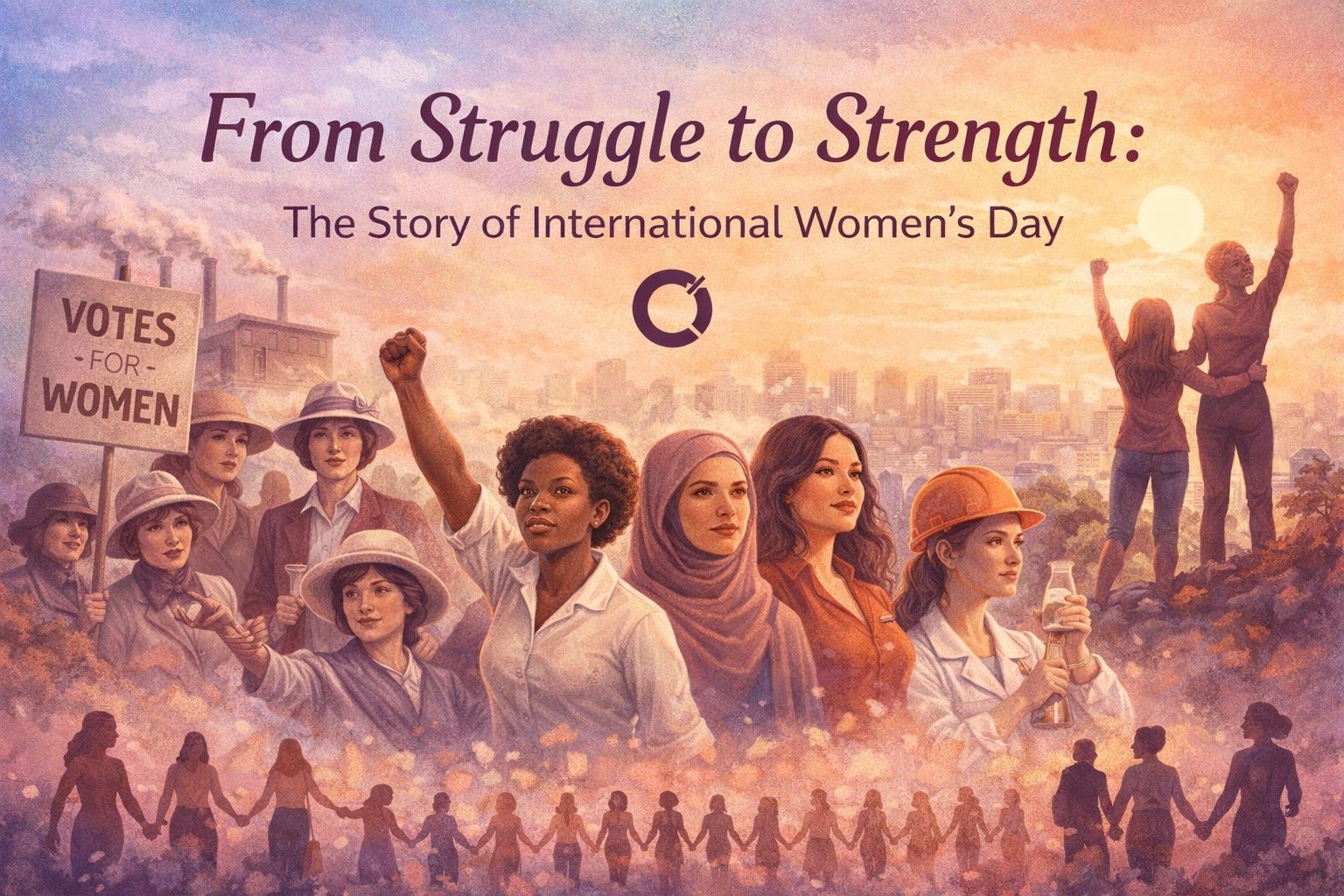
Every year on March 8, the world comes together to celebrate International Women’s Day—a day dedicated to honoring the achievements, resilience, and contributions of women across all walks of life. Beyond celebration, it is also a reminder of the long struggle for equality and the work that still lies ahead.
The origins of International Women’s Day trace back to the early 20th century, during a time of rapid industrialization and social change. Women, especially in factories, often worked in harsh conditions for low wages and had limited rights.
A key moment came in 1908, when thousands of women marched in New York City demanding better pay, shorter working hours, and voting rights. Inspired by such movements, the first National Women’s Day was observed in the United States in 1909.
The idea soon gained global attention. In 1910, at the International Socialist Women's Conference held in Copenhagen, German activist Clara Zetkin proposed the idea of an international day to advocate for women’s rights. Her proposal was unanimously accepted, marking the beginning of a worldwide movement.
The first official International Women’s Day was celebrated in 1911 in several European countries. However, March 8 became the fixed global date after a major protest by women in Petrograd in 1917, demanding “bread and peace” during World War I. This protest played a significant role in political change and later led to March 8 being adopted as the official date. In 1975, the United Nations officially recognized International Women’s Day, further strengthening its global importance.
International Women’s Day began as a response to inequality and injustice. Women were fighting for:
It was created to give women a unified voice and a platform to demand change—something that continues to this day.
Women have played a transformative role in shaping societies. From science and politics to arts and education, their contributions continue to inspire. Today, more women are breaking barriers, leading organizations, and driving innovation.
Despite progress, gender inequality still exists. Issues like wage gaps, limited access to education in some regions, and underrepresentation in leadership remind us that the mission is not yet complete.
Empowering women leads to stronger communities and economies. When women have equal access to opportunities, everyone benefits. Education, independence, and support systems are essential to this empowerment.
International Women’s Day is not just a celebration—it is a powerful movement rooted in history. From protests in the early 1900s to global recognition today, it represents the ongoing fight for equality. By honoring the past and taking action in the present, we can help build a future where every woman has the opportunity to thrive.
Happy Reading!
Regards,
Amirtha Prasanna