
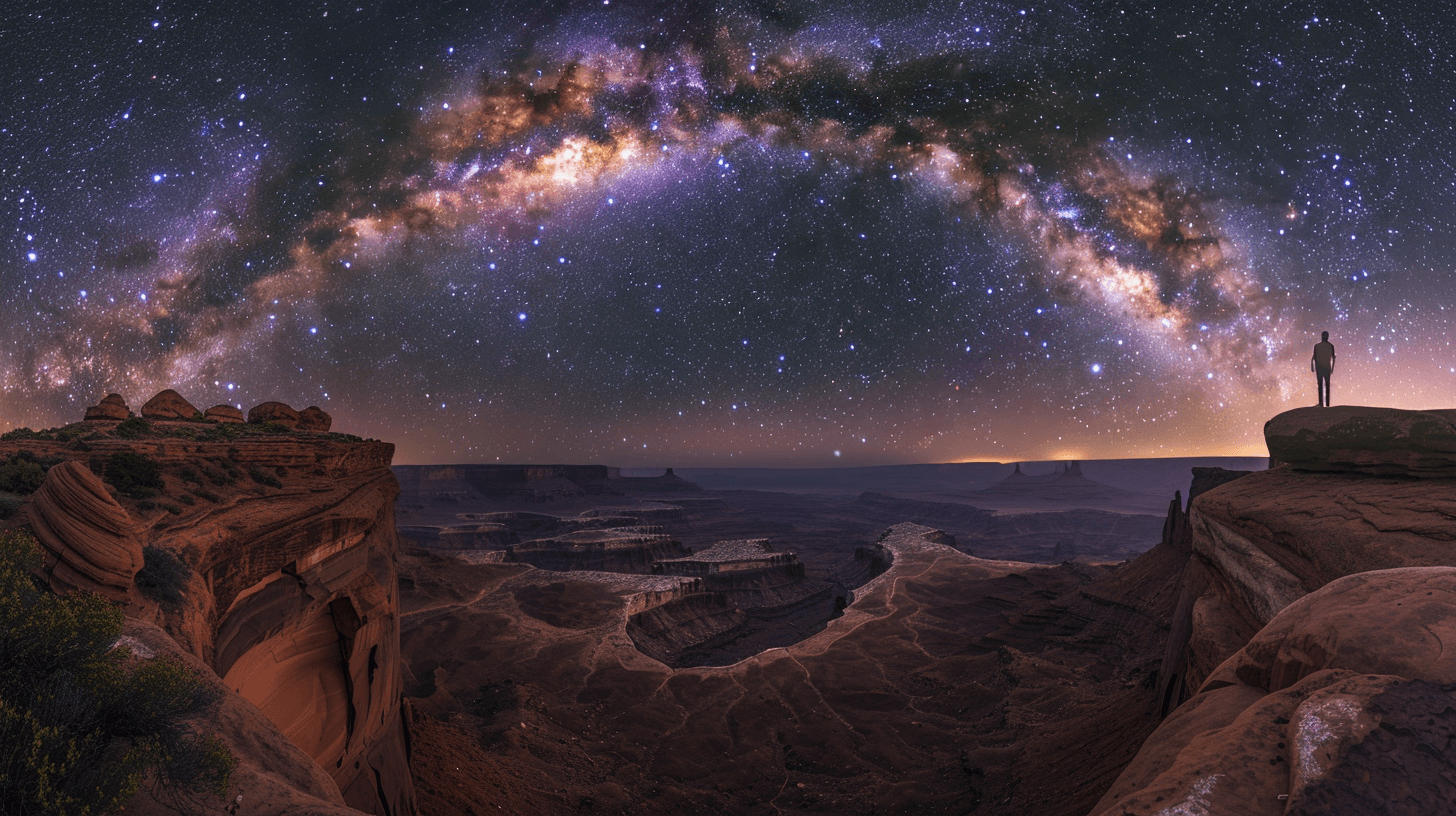
In our last article, we travelled through time — from ancient sky-watchers to brilliant scientists like Galileo, Newton, and Einstein — who helped us understand that the universe is not just a mystery to admire, but something we can study, measure, and even predict.
We ended by asking: What’s next?
Today, science is going far beyond what the naked eye can see. With powerful telescopes, space missions, and smart machines, scientists are diving into the unknown parts of the universe — asking bigger, deeper questions.
Let’s explore some of these amazing frontiers together!
Have you ever looked up at the night sky and wondered what else is out there?
Well, scientists believe that everything we can see — stars, planets, galaxies — makes up only 5% of the universe!
The rest is made up of something we can’t see at all: dark matter and dark energy.
Even though we can’t see them directly, their effects can be measured. It's like seeing wind by how it moves the trees.
We’re not just looking at the universe — we’re reaching out into it.
The James Webb Space Telescope is one of the most powerful ever built. It helps scientists look at galaxies formed billions of years ago, almost back to the beginning of time.
At the same time, we’re getting closer to walking on Mars. Robotic rovers like Perseverance are already exploring its surface, looking for signs of ancient life and preparing for future human missions.
These missions are helping us learn more about how planets form, whether life ever existed elsewhere, and maybe even where we can go next.
One of the biggest questions humans have ever asked is: “Are we the only ones out here?”
Scientists are searching for life beyond Earth in two main ways:
We haven’t found aliens yet — but the search continues. And every new planet we find brings new hope.
The universe is huge — and there’s a lot of data to go through.
That’s where AI (Artificial Intelligence) comes in. Scientists are using AI to:
AI works like a super-smart helper, doing the hard calculations and letting scientists focus on asking the right questions.
Here’s a wild thought: What if our universe isn’t the only one?
Some scientists believe we might live in a multiverse — where there could be many other universes, each with different rules, planets, or even versions of "us."
While this idea isn’t proven, it’s being explored through mathematical theories and space observations. It reminds us how much we still don’t know — and how exciting that is!
From ancient myths to advanced machines, our journey to understand the universe has come a long way — and it’s still going.
We’re now asking questions we couldn’t even imagine before, and every discovery brings us closer to understanding our place in the cosmos.
So, next time you look at the stars, remember:
You're not just seeing light — you're seeing history, mystery, and maybe even the future.
✨ Stay tuned for the next article, where we’ll explore:
Until then, stay curious… and always keep looking up.
With wonder,
Sha